.png)
Event Safety Planning in Hong Kong: Protocols That Protect Your Guests and Your Brand

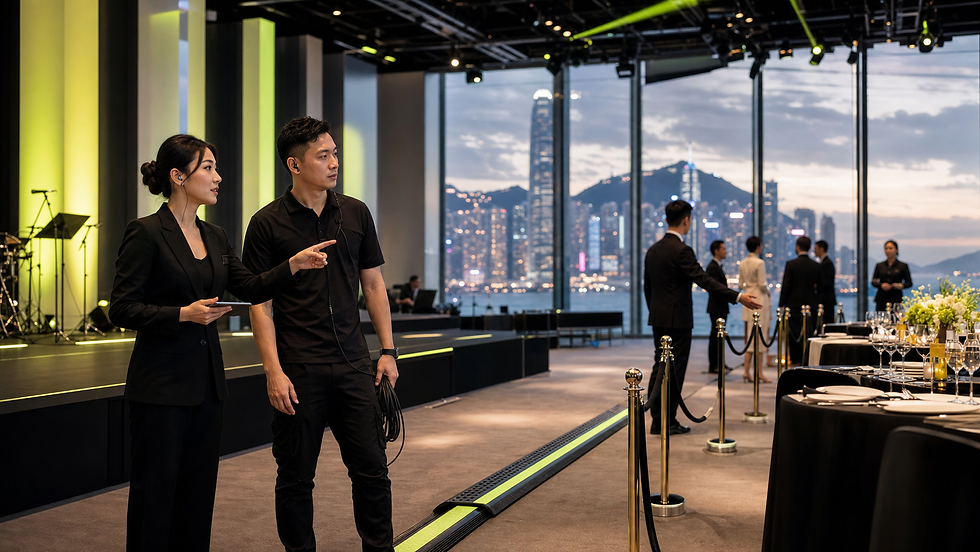
Trust begins with safety. Not with the flowers, not with the lighting cues, with the plan nobody sees. Event safety planning in Hong Kong is not a checklist tucked away in a folder. It is the foundation every other decision gets built on, and when guests feel secure, they relax into the night instead of watching the exits.
1. Every event starts with a real risk assessment
A thorough risk assessment covers more ground than most people expect.
Venue evaluation, including layout, crowd flow, and entry and exit routes
Identification of vulnerable points like loading zones, backstage areas, or dense crowd spots
Scenario planning for overcrowding, severe weather, or technical failures.
Skip this step and every later decision gets built on guesswork.
2. Access control protects the room without slowing it down
Guests should never feel like they are passing through a checkpoint, even when strong controls sit behind the scenes.
QR based credentials, segmented access levels for guests, VIPs, and staff, and real time capacity monitoring let organisers track the room without guests noticing the machinery.
3. Licensed security is non negotiable
Any security provider on site needs a current company license under the Security and Guarding Services Ordinance, along with individual guard permits for every officer assigned to the event.
This is not paperwork for its own sake. It protects the client, the guests, and the brand if anything ever goes wrong.
4. Why event safety planning in Hong Kong depends on rehearsed emergency plans
A safety plan only works if the team has actually practiced it. That means a defined emergency response structure, venue specific evacuation procedures matched to crowd size, and reliable communication tools like radios or PA systems. Regular drills build the muscle memory that keeps a team calm if something real happens.
5. VIP and high profile guests need their own protocol
Executives, principals, and high profile attendees often need discreet handling that blends into the evening rather than standing out.
Planned arrival and departure routes, quiet escorting between spaces, and close coordination with the event team keep this layer invisible to everyone else in the room.
Safety does not compete with a great event. It is what makes a great event possible.


Comments